

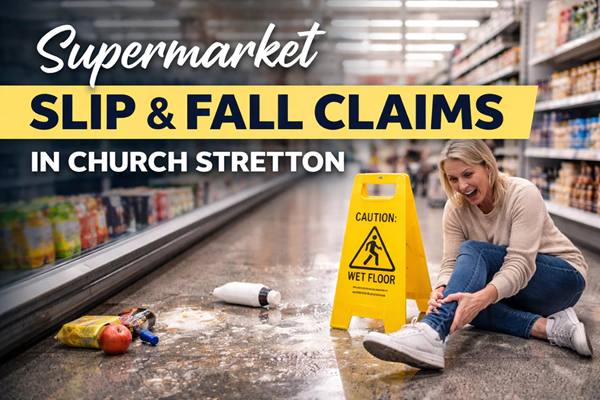
Most supermarket accidents do not start with panic. They start with embarrassment. Someone slips, regains their balance, maybe laughs it off, and carries on shopping. In Church Stretton, many people leave a supermarket after a fall, believing they are “fine,” only to realise later that the injury is more serious than it first appeared.
By the time pain sets in, questions follow. Was anyone actually at fault? Does a supermarket have responsibility? Is it worth doing anything now?
This guide explains how slip, trip, and fall claims in supermarkets work, and when an injury in a Church Stretton supermarket may justify compensation.
Why supermarket accidents are so common
Supermarkets are busy environments. Floors are cleaned frequently, spillages happen without warning, stock is moved constantly, and customers are often distracted. These conditions make slips and trips one of the most common causes of public injury.
Common hazards include wet or freshly cleaned floors, leaking refrigeration units, loose mats, uneven flooring, and items dropped in aisles. Poor lighting or unclear warning signs can increase the risk further.
While not every accident means someone is legally responsible, supermarkets are expected to anticipate these risks and manage them properly.
The duty supermarkets owe to customers
Supermarkets owe a duty of care to customers to take reasonable steps to keep the premises safe. They don’t have to stop every accident, but they should have systems to quickly identify and address hazards.
This includes regular inspections, clear cleaning procedures, adequate signage, and swift responses to known risks. Liability may arise if these systems are absent or inadequately implemented.
In practice, claims often turn on whether the supermarket knew, or should have known, about the hazard and failed to act in time.
Injuries that commonly follow slips and falls
Supermarket falls can result in a wide range of injuries. Soft tissue injuries to the back, neck, hips, and shoulders are common, particularly where people twist or fall awkwardly. Fractures to wrists, arms, ankles, or hips can occur, especially in older customers.
Head injuries are also a concern, even where symptoms seem mild at first. Some injuries worsen days or weeks after the incident, which is why early medical assessment matters.
The seriousness of the injury often becomes clearer only after the initial shock has passed.
What to do after a supermarket accident
If you slip or fall in a supermarket in Church Stretton, reporting the incident before leaving is important. Ask staff to record the accident and request a copy of the incident reference if possible.
Photographs of the area, the hazard involved, or your injuries can be extremely helpful, particularly as conditions may be cleaned or changed shortly after. If anyone witnessed the fall, their details may also assist later.
Seeking medical attention creates an independent record of injury, which can be vital if symptoms develop over time.
How liability is assessed in practice
Supermarket injury claims are evidence-led. The key question is whether reasonable steps were taken to prevent the accident.
For example, was a spillage present long enough that staff should have noticed it? Were warning signs in place? Were inspection logs completed properly? These details often determine whether a claim succeeds.
Supermarkets are typically insured, and claims are handled through insurers rather than directly by store staff or managers.
Compensation is not automatic
It is important to understand that slipping or falling does not automatically result in compensation. The claim must show that the accident was caused by a failure in safety procedures, not simply bad luck.
This is often where people feel unsure and delay seeking advice. Many people assume that their account of the incident will be pitted against the supermarket’s version. In reality, CCTV, inspection records, and staff procedures often play a role in establishing what happened.
What compensation may include
If liability is established, compensation may cover pain and suffering caused by the injury, loss of earnings if work is affected, medical expenses, travel costs, and any ongoing treatment or support required.
More serious injuries may involve longer-term considerations, including reduced mobility or the need for assistance during recovery.
Each case is assessed individually based on the injury and its impact.
Time limits for supermarket injury claims
Most public liability claims, including supermarket accidents, must be started within three years of the accident date. Delays can make claims harder, particularly if CCTV footage is overwritten or records are no longer available.
Early advice can help preserve evidence, even if you are unsure about proceeding.
How Marley Solicitors can help
Marley Solicitors provides assistance to clients in Church Stretton and throughout Shropshire who have sustained injuries in public spaces, such as supermarkets. We can assess whether safety failures may have contributed to your accident and explain your options clearly.
Our approach focuses on evidence, practicality, and clear guidance rather than assumptions.
Moving forward after a supermarket accident
If you were injured in a Church Stretton supermarket and are unsure whether you can claim, understanding how liability and compensation work can help you decide what to do next. Many people wait too long simply because they do not know where responsibility lies.
Clarity early on can prevent missed opportunities later.