

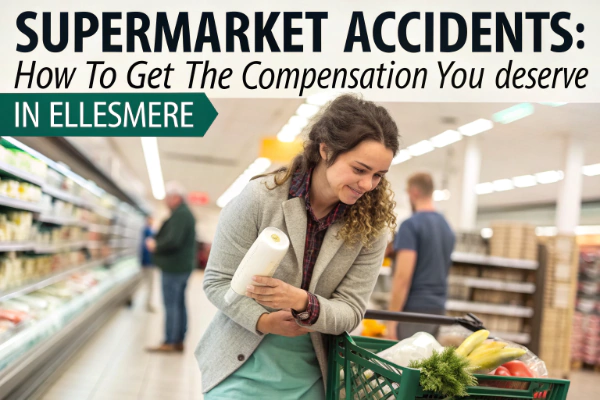
After a supermarket accident, many people focus on getting home and carrying on as normal. Compensation often feels like something to think about later, or not at all. In Ellesmere, the situation leads many injured shoppers to quietly accept pain, lost income, or disruption that could have been avoided with proper safety measures.
Compensation does not involve assigning blame or inflating claims. It exists to address the real consequences of an avoidable accident. Understanding how compensation works after a supermarket accident can help you decide whether pursuing a claim makes sense for you.
What compensation is designed to cover
Compensation following a supermarket accident is intended to reflect the full impact of the injury, not just the moment of the fall itself. This includes physical pain and discomfort, but it also extends to how the injury affects everyday life.
Even where injuries heal, people may experience weeks or months of restricted movement, disrupted sleep, or difficulty working. Compensation recognises this disruption instead of focusing solely on whether the injury was dramatic.
This is why injuries that seem manageable at first can still justify a claim.
Injuries commonly linked to supermarket accidents
Slips, trips, and falls in supermarkets often lead to soft tissue injuries affecting the back, neck, hips, and shoulders. These injuries may limit mobility and make everyday tasks uncomfortable.
Fractures to wrists, arms, ankles, or hips are also common, particularly where people instinctively try to break a fall. Head injuries are a concern too, especially where symptoms develop later rather than immediately.
In Ellesmere, many claims involve injuries that worsen after the initial incident, which is why early medical assessment is important.
Financial losses people often underestimate
One of the most common reasons people rule out compensation is because they underestimate the financial impact of their injury.
Time off work is an obvious factor, but reduced hours, lost overtime, or an inability to perform certain duties can all affect income. Over time, the costs of travelling to medical appointments, paying for prescriptions, and getting treatment add up.
In some cases, family members provide informal care or assistance during recovery. Despite the free nature of this support, the law acknowledges its significance in determining compensation.
How compensation claims are assessed
Supermarket accident claims are not based on sympathy. They are assessed using evidence.
This typically includes CCTV footage, cleaning and inspection records, incident reports, witness statements, and medical evidence. The focus is on whether reasonable steps were taken to prevent the accident and whether the injury resulted from a failure in those systems.
Most supermarkets are insured, and claims are handled through insurers rather than directly by store staff. Many cases are resolved through negotiation without court proceedings.
Why evidence matters more than severity
It is common to assume that only serious injuries result in compensation. In reality, evidence often matters more than severity.
A moderate injury with clear proof of a safety failure may succeed, while a more serious injury without evidence may not. This is why reporting the accident promptly and preserving details of the hazard involved can be critical.
In Ellesmere, CCTV footage is often overwritten within a short period, which can limit options if action is delayed.
When compensation may be reduced
Compensation is not always paid in full. In some cases, it may be reduced if you are found to have contributed to the accident. For example, if clear warning signs were in place and ignored, the result may affect the outcome.
This feature does not automatically prevent a claim, but it can influence the level of compensation awarded.
Time limits still apply
Supermarket accident claims must usually be started within three years of the accident date. Waiting too long can make claims harder, particularly if records are lost or witnesses are no longer available.
Seeking advice early does not mean you must proceed, but it helps protect your position.
How Marley Solicitors can help
Marley Solicitors supports clients in Ellesmere and across Shropshire who have been injured in supermarkets and other public places. We can assess whether compensation may be available, explain what it could realistically cover, and guide you through the process with clarity.
Our approach focuses on evidence, proportionality, and helping you make an informed decision rather than encouraging unnecessary claims.
Deciding whether to pursue compensation
If you were injured in a supermarket in Ellesmere and are unsure whether compensation is appropriate, understanding how claims are valued can bring clarity. Many people rule themselves out too early because they misunderstand what compensation is meant to address.
Clear advice can help you decide your next step with confidence and avoid carrying the consequences of an avoidable accident alone.